




Anyone on probation who has been told to expect alcohol testing usually has the same question: how long does a drink actually stay detectable?
The answer isn’t a single number. It depends on which test a program uses, how much was consumed, and several individual factors that most online answers skip over entirely.
This guide breaks down what probation programs are actually testing for, the full range of methods available beyond a standard urine check, and the real windows behind them, using EtG testing and its companion markers as the starting point.
For someone already navigating court requirements, getting this wrong, whether by underestimating a window or misreading a result, can carry consequences well beyond an awkward conversation.
What the Test Is Actually Looking For
EtG testing rarely stands alone. Most probation and treatment labs actually screen for two markers together: ethyl glucuronide and ethyl sulfate, reported jointly as etg/ets because looking at both improves accuracy over either marker by itself.
Both are formed the same way, as direct byproducts of the body processing alcohol, which is why each one counts as a metabolite of alcohol rather than a separate class of substance. Alongside a handful of other compounds, they belong to a category researchers call biomarkers, measurable substances in the body that indicate exposure to something specific, in this case, drinking.
Running both markers together matters for anyone facing regular monitoring. EtG alone can occasionally miss very light drinking that EtS still picks up, and pairing the two reduces the chance of a single result being challenged or thrown out later in a probation hearing.
The Science: How a Drink Becomes a Detectable Marker
Alcohol starts as ethanol, absorbed through the stomach and small intestine into the bloodstream during absorption, a process that speeds up on an empty stomach and slows down with food already present.
From there, the liver takes over. An enzyme called alcohol dehydrogenase breaks it down first, kicking off alcohol metabolism and producing several alcohol metabolites along the way, EtG and EtS among them. How efficiently this happens depends heavily on liver function, since a liver working at full capacity clears these compounds faster than one under strain from other conditions.
Chronic heavy drinking can strain that process over time, which is part of why care teams supporting someone through medication-assisted treatment keep an eye on overall liver condition as part of ongoing care, not just a single test result.
Every Way Probation Can Test for Alcohol
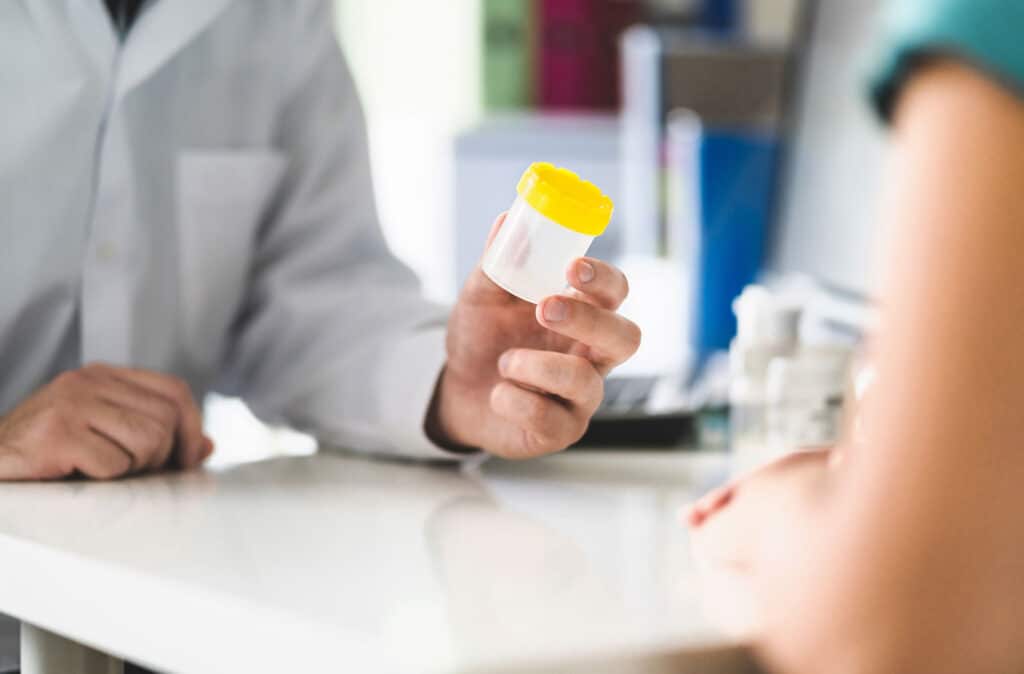
A urine sample for EtG is the most common method, but it isn’t the only one available to a probation department, and knowing the full menu explains why some programs combine more than one approach.
A handheld breathalyzer gives a quick, on the spot BAC reading, useful for confirming someone is not currently under the influence but useless for anything beyond a few hours. Breath alcohol tests, the more formal version used in workplace and DOT settings, work on the same principle with stricter calibration and documentation requirements. Blood tests measure blood alcohol concentration directly and share that same short window. Urine alcohol tests extend the timeline out to several days by targeting EtG and EtS rather than alcohol itself. Hair tests, which analyze a small hair follicle sample, stretch the window out to roughly ninety days, making them useful for establishing a longer pattern rather than a single incident. Saliva testing sits in between, offering a fast result with a slightly longer window than a breath test alone.
| Method | Approx. Window | Notes |
| Breath device | A few hours | Confirms current impairment only |
| Blood draw | Up to 12 hours | Direct measurement, short window |
| Saliva swab | Up to 24 hours | Fast result, slightly longer window |
| Urine (EtG and EtS) | 1 to 4 days | Standard for probation monitoring |
| Hair sample | Up to 90 days | Reflects a longer-term pattern |
Anyone working through an intensive outpatient program alongside court-ordered testing benefits from understanding which method is actually being used, since that matters just as much as the result itself.
Real Detection Windows for Probation Testing
The detection window for urine EtG testing typically runs from about 12 hours after a single drink up to 3 or 4 days after heavier drinking, though the exact number depends on several individual factors rather than a fixed rule.
- Individual metabolism varies significantly from person to person, and someone with a faster system clears these markers sooner than someone with a slower one.
- Metabolic rate is influenced by age, activity level, and overall health, all of which shift the numbers slightly in either direction.
- Body composition changes how alcohol distributes through the body once absorbed, since it moves through water rather than fat tissue.
Because of this variation, many probation programs build a testing schedule around a detection period wider than the minimum, checking every few days rather than relying on a single test to catch a violation.
Collecting and Validating the Sample
Labs don’t just measure EtG and EtS, they also check whether the urine specimen itself is valid. Temperature is checked immediately after collection, and the sample is screened for common signs of tampering.
One of the most common flags is dilute urine, meaning the specimen has a lower-than-expected creatinine or specific gravity reading. This can happen from drinking large amounts of water, but it can also happen naturally, so most programs treat a diluted result as a reason to retest rather than an automatic violation.
Programs typically also document chain of custody at every step, from collection to lab analysis, so a result can hold up if it’s ever formally challenged. Programs built around relapse prevention tend to treat one questionable result as a conversation starter, not a foregone conclusion.
False Positives and Incidental Exposure
Not every positive result means someone drank. Because EtG and EtS testing is sensitive enough to pick up trace amounts, unintentional contact with everyday alcohol containing products can occasionally cause a low-level reading with nothing to do with drinking.
Common sources include:
- Mouthwash and other alcohol based oral rinses used repeatedly on the same day
- Hand sanitizer, particularly when used often in a small or poorly ventilated space
- Certain foods, cooking extracts, and some over-the-counter medications
This is exactly why unrelated hits get so much attention in probation settings, where a single number can carry real consequences.
Labs that follow SAMHSA guidance on cutoffs and confirmation testing tend to catch and explain these cases rather than treating every reading as equivalent. Anyone managing test results alongside a co-occurring mental health condition benefits from a program built around dual diagnosis treatment, where context like this gets taken seriously.
What a Positive Result Means for Probation
A confirmed positive result is usually reported straight to the assigned probation officer, who then decides next steps based on the specific terms of that person’s supervision.
A single low-level result may prompt a conversation or a warning, while a pattern of results, or one at a high concentration, is more likely to be treated as a probation violation with formal consequences.
What often gets missed is that repeated positive results can also be a sign of alcohol use disorder rather than simple noncompliance, and treating it purely as a legal problem misses a chance to actually address what’s driving it.
Well-timed interventions can often do more than another warning ever will.
Using This Information the Right Way
None of this is meant to help anyone time a drink around a test. Detection ranges are estimates, not a script, and probation testing exists to support real accountability, not to be outsmarted.
Monitoring abstinence works best when it’s paired with actual support rather than just consequences. Long Island Treatment Center’s clinical team builds that support around family therapy, so testing becomes one part of a bigger plan instead of the whole plan.
That distinction, between punishing a single slip and helping someone build a different pattern going forward, tends to matter more for long-term outcomes than any one test result ever will.

Get Support Before a Test Becomes a Problem
A single result rarely tells the whole story, and it shouldn’t be the only thing standing between someone and real help. Long Island Treatment Center offers outpatient programs built around this exact kind of situation, court-ordered testing included.
If a probation requirement or a recent result has become hard to manage alone, reach out today. Our team can verify your insurance before the first visit. Contact us to schedule a confidential assessment.