



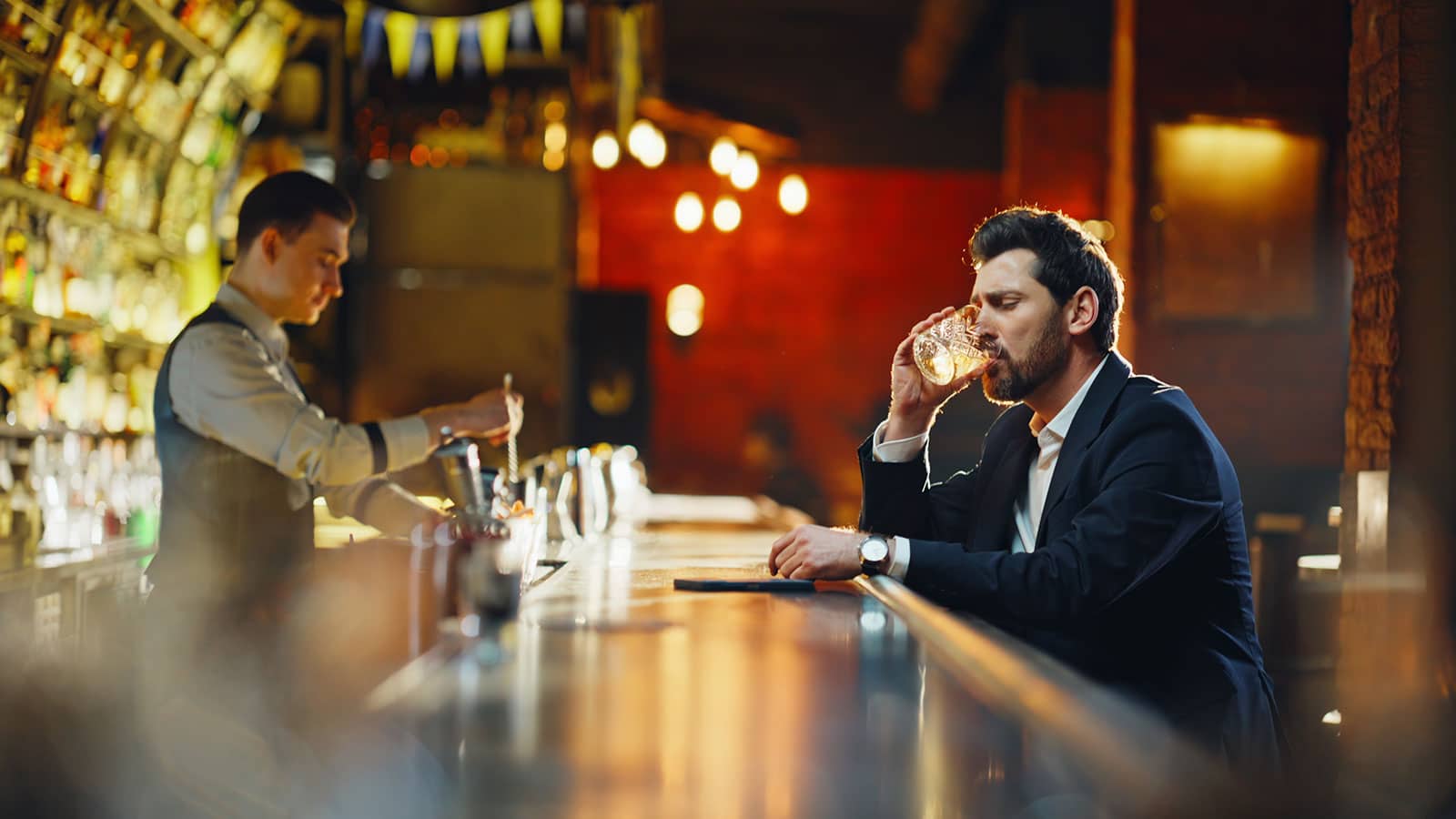
We’ve all witnessed drunk confidence.
The quiet one suddenly overshares. The chronic overthinker becomes wildly self-assured. The shy friend is dancing like nobody’s watching.
Some call it liquid courage. Others just call it a good time.
If you’re someone who struggles socially, you might think, “I can get used to this feeling.”
But why does alcohol make you feel more confident? Is it real confidence? And more importantly, what does it mean for your mental health and self-esteem?
Find the answers here.
What Is Drunk Confidence?
Drunk confidence is the temporary rush of self-confidence you get from drinking alcohol. You feel braver. Less awkward. Less worried about what others think. Conversations flow and jokes land (or at least you think they do). You’re simply feeling your best.
But is alcohol actually building confidence?
Read that first sentence again. Notice the word “temporary”? There’s a biological reason why that confidence has an expiration date.
The Brain Chemistry Behind Liquid Courage
Why do those first couple of drinks feel liberating? And what makes a night out so exciting and carefree?
The answer to both questions is dopamine.
Dopamine is your brain’s way of saying, “I feel good.” Technically, it’s a neurotransmitter (a chemical messenger) tied to pleasure, reward, and motivation. It’s the same chemical that lights up when you win a game, hear a compliment, or fall in love.

But where does alcohol fit into this?
Think of your brain like a nightclub. Normally, there’s a professional bouncer (a potassium channel called KCNK13) who keeps the “crowd” of dopamine in check.
When you take a drink, alcohol blocks the bouncer, swings the door open, and rushes straight into the VIP lounge, an area called the Ventral Tegmental Area (VTA). This major dopamine producer then starts blasting the nucleus accumbens (the brain’s reward center) with dopamine.
At the same time, alcohol pulls very specific levers in your brain. It turns up GABA (the calming neurotransmitter) and turns down glutamate (the chemical that keeps you alert and slightly on edge).
The result? Your inhibition hits the floor. You feel bold, social, and unbothered. The very definition of liquid courage.
The Catch
Yes, there’s a catch.
You now know that alcohol excites you while simultaneously suppressing your inhibitions. But the thing about our brain is that it loves balance (a state called homeostasis). It doesn’t like the “club” being this loud for too long.
When the brain realizes the party is getting out of hand, it goes into damage control-mode. To fix the chemical imbalance, it spikes glutamate and tanks your dopamine levels, usually leaving you with less dopamine than you started with. This forces you back into a state of alertness.
This is the “rebound.” It’s the reason that confidence is fleeting. It’s also why you might wake up the next morning feeling the polar opposite of “electric.”
Enter “hangxiety.” Drunk confidence is a loan, and the brain comes to collect.
If it’s your first time hearing the term, hangxiety (hangover + anxiety) is the physical manifestation of hyper-awareness. Because your glutamate levels are through the ceiling, your brain is on “red alert.”
Besides the headache, you wake up with a sinking sense of dread. Your brain begins replaying every interaction from the night before. Did I talk too much? Did I embarrass myself?
When your brain is high on glutamate and low on dopamine, it’s primed to scan for mistakes. It starts looking for threats, social missteps, and anything that might explain why you now feel anxious. Things that were harmless at the time now feel cringeworthy, even catastrophic.
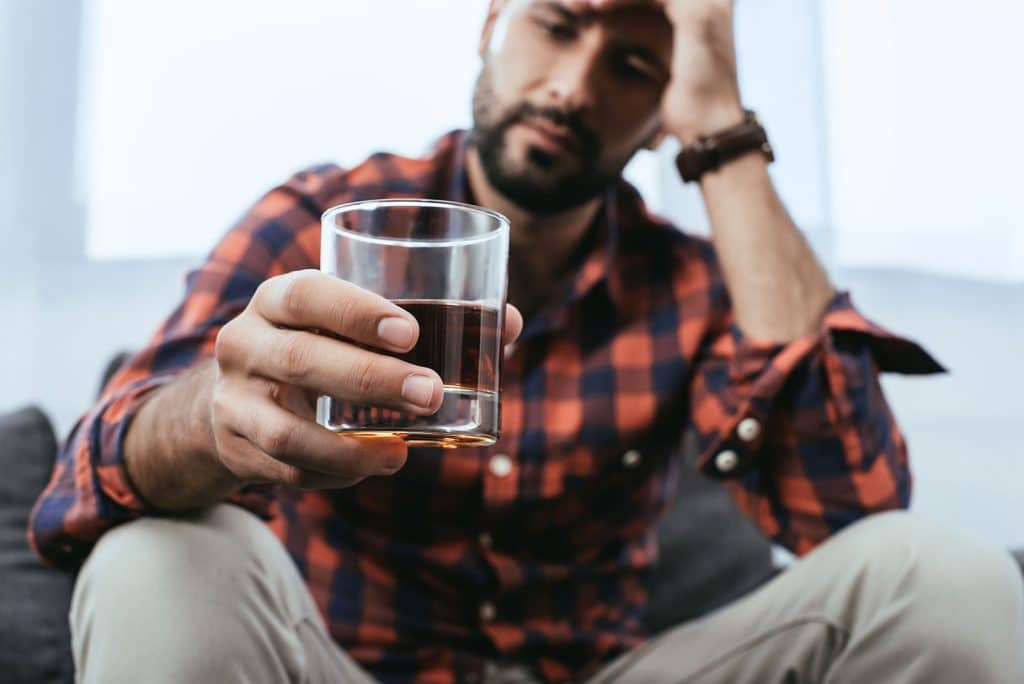
Confidence vs. Disinhibition: What’s the Difference?
Some may argue that liquid courage isn’t really a boost of confidence but a lack of self-awareness. Either way, it feels good at the moment. However, the difference between confidence and inhibition is where the science of the “morning after” truly begins to make sense.
True confidence (or real self-esteem) comes from self-trust, competence, and self-acceptance. It’s stable. It carries over into the next day, into difficult conversations, into stressful moments.
Drunk confidence is borrowed. It exists only while you have alcohol in your system.
The truth is that alcohol doesn’t give you new social skills. It only temporarily removes the fear that usually stops you from expressing yourself.
Why Drunk Confidence Feels So Convincing
The trickiest part about drunk confidence is how incredibly convincing it is while it’s happening. It’s easy to think, “Alcohol brings my true self” or “This is who I really am.”
There’s a tiny grain of truth in that. Alcohol does lower your walls. It can reveal desires, opinions, or emotions you usually suppress. However, it also distorts perception.
You may feel 10/10 on the confidence scale, but you’re actually less capable of judging how you’re coming across. That’s the gap where “liquid courage” turns into awkward social blunders or regret.
Drunk Games, Drinking Games, and Party Culture
A lot of drunk confidence shows up during structured fun, like drunk party games. You get laughs, cheers, and attention. So, you keep pushing your boundaries.
Games like trivia-based and party card games are designed to loosen people up. They create a good time. In moderation, these moments can be harmless and even bonding. But games that reward excessive drinking can amplify risky behavior.
So, ask yourself: Is this game helping me connect with others, or is it just pushing me past my comfort zone for laughs?
There’s a difference.

Social Anxiety and Alcohol
The rebound after a night of drinking hits hardest for those who already struggle with social anxiety or low self-esteem. Alcohol doesn’t actually fix those feelings. It only mutes them.
When that drunk confidence wears off, your “inner critic” comes back roaring. You might wake up feeling emotionally hungover even if your head doesn’t hurt.
This creates a tempting, but dangerous cycle. If the only time you feel “socially capable” is when you have a drink, your brain begins to outsource its confidence to a substance.
You might start to feel that “Sober You” isn’t fun or interesting enough. And the more you rely on liquid courage to navigate social spaces, the less practice your brain gets at building natural resilience.
Worse yet, repeated cycles of inflated confidence followed by shame can chip away at genuine self-esteem over time.
Is Drunk Confidence Ever a Good Thing?
The answer isn’t a simple no.
Drunk confidence can sometimes show you what’s possible. It can reveal that you can open up to people, make a joke, or relax socially. At least under certain conditions.
The problem isn’t the feeling itself. It’s mistaking it for a solution.
Alcohol shouldn’t be the source of your confidence. At best, it shows you behaviors you can later work toward when you’re sober.
Using Alcohol Mindfully at Your Next Party
So what do you do with all this information at your next party?
Try:
- Noticing how many drinks it takes before you let your guard down
- Checking in with your behavior throughout the night
- Asking yourself: Would I say this sober?

How to Build Confidence Without Alcohol
Real confidence isn’t something you discover at the end of the glass. It’s built gradually through practice and repetition. It may not come fully formed, but you can grow into it.
1. Practice Being Uncomfortable
Confidence isn’t the absence of anxiety, but the ability to function alongside it. Go to a social event and stay sober if you can. Speak up, make eye contact, and hold it a second longer than usual.
2. Build Competence Outside Social Settings
Confidence is cumulative. The more you trust yourself in everyday life, the easier social situations become. Set small goals and follow through. Keep promises to yourself. Learn skills that make you feel capable.
3. Regulate Your Nervous System
A lot of “confidence” is actually nervous system regulation. Alcohol works because it slows things down. You can do the same without the side effects. Try deep breathing, grounding exercises, movement, and short walks.
FAQs About Drunk Confidence
Is drunk confidence fake?
Why do I feel more myself when drinking?
Can drinking help with building confidence long-term?
Can alcohol help with social anxiety?
Is it unhealthy to rely on alcohol socially?
Final Thoughts: Confidence That Lasts
Drunk confidence can feel magical. It can make a good time even better. The problem starts when drunk confidence becomes your primary tool for socializing or a crutch for dealing with anxiety.

If confidence only exists when you drink, that’s worth paying attention to. Rely on that too much, and you might forget how to find the path to confidence on your own.
Instead, take the lessons from those night outs. Genuine growth comes from navigating those social situations while fully present and sober.
For some people, that process is easier with support. At Long Island Treatment Centers, we believe in a wellness-focused, whole-person approach. We help individuals navigate the complexities of mental health, from healing insecurities and self-esteem issues to mastering emotional regulation.
Call us today for more information.